Black tea contains polyphenols, primarily theaflavins and thearubigins that have been studied for antioxidant, anti-inflammatory, and antibacterial effects relevant to skin health.
Regular consumption may support a calmer, more even complexion by reducing oxidative stress and inflammatory activity over time.
It is not a substitute for sunscreen, moisturiser, or a targeted skincare routine, but it is one of the more credible dietary additions for long-term skin health when consumed consistently.
The benefits are stronger for drinking black tea daily than for topical application in most cases.
People who talk about skin care often go from one extreme to the other. On one end, every food item in the kitchen is shown to be a miracle. On the other, anything natural is ignored unless it acts like a prescription drug.
Black tea sits somewhere in the middle, which is exactly why it deserves a careful, honest look.
It won’t give you perfect skin right away. It doesn’t replace sunscreen, sleep, hydration, or a barrier-support routine. What it does have is a chemical profile that matters.
Polyphenols, such as theaflavins and thearubigins, are found in black tea. These compounds have been studied for their ability to fight inflammation and protect cells from oxidative damage.
Oxidative stress and inflammation are closely linked to dullness, uneven tone, visible fatigue, and premature aging in skin research.
This article takes a practical look at how black tea might help skin look healthier either by drinking it regularly or by applying it topically in a specific, measured way.
1. How Black Tea Polyphenols Defend Skin Against Oxidative Stress
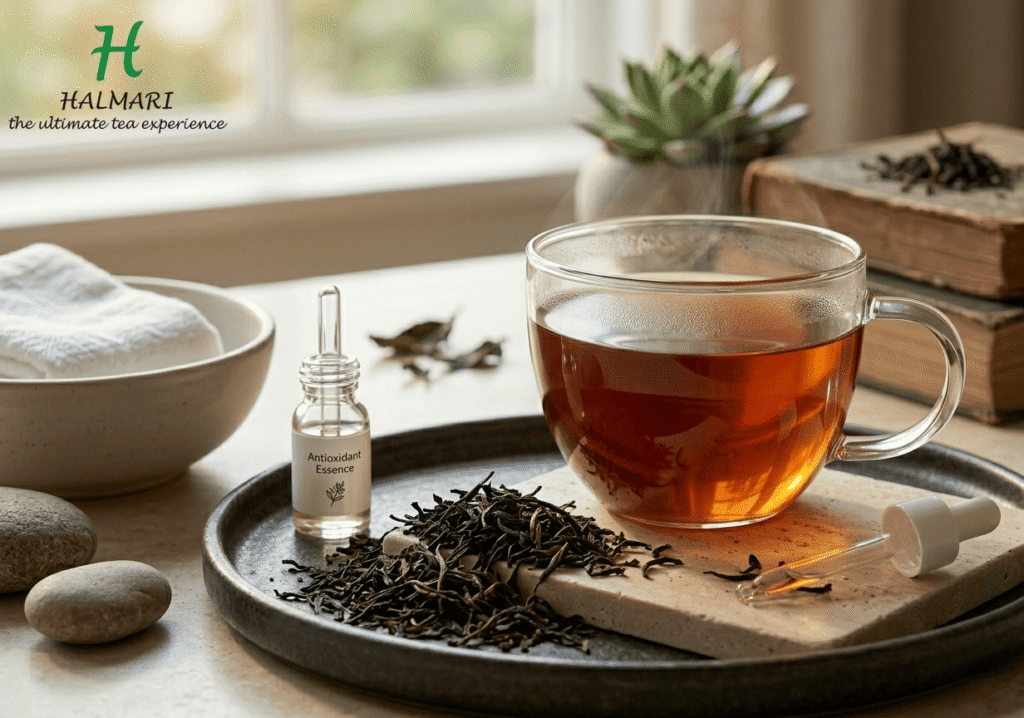
Black tea contains theaflavins and thearubigins, which are polyphenols studied for their ability to neutralise reactive oxygen species (free radicals) that cause oxidative damage to skin cells.
By supporting the skin’s antioxidant defences, these compounds may help maintain a more even tone, reduce dullness, and slow some of the visible effects of environmental stress on the skin’s surface.
Skin doesn’t need much to show that it’s stressed. It starts to look flat. The tone becomes less even. The surface loses that freshness it had a few weeks ago.
Oxidative stress is one of the key drivers behind those changes. Researchers have looked into tea polyphenols specifically because they help fight the reactive oxygen species responsible for this kind of cellular damage.
This is often where the black tea benefits for skin begin. The benefit is not strictly cosmetic, it starts at the cellular level. When antioxidant support is stronger, skin is more likely to stay calm and resilient over time.
This is one reason why tea extracts keep appearing in studies on skin protection and healthy aging.
2. Why a Clearer & More Even Complexion is Connected with Frequent Black Tea Consumption
Studies on tea polyphenols suggest they support conditions that make skin appear less stressed and more even-toned.
The effect is not cosmetic, it results from reduced oxidative load and lower inflammatory activity, which over time contribute to a complexion that looks calmer, clearer, and more settled.
Black tea does not act like a concealer or toner; it may create better underlying conditions for healthier-looking skin.
When people talk about glow, they often mean several things at once like less visible stress, better hydration, fewer rough patches, and a complexion that looks more settled.
That is why it is hard to link glow to just one ingredient. Still, studies on tea polyphenols suggest they help keep skin from looking tired and uneven.
That is why many people associate black tea with glowing skin and a more polished complexion.
Black tea doesn’t make your skin look better the way makeup does. It could help create the right underlying conditions for skin to look clearer and healthier.
It is significant that there is a difference. Good skincare writing should leave room for that nuance.
3. How Black Tea’s Anti-Inflammatory Properties Help Calm Reactive and Sensitive Skin
The polyphenols in black tea, primarily theaflavins and thearubigins have been reviewed in dermatology and cosmetics research for their ability to modulate inflammatory signalling pathways.
Reduced inflammation translates to less redness, lower reactivity, and fewer episodes of post-exposure sensitivity.
Because oxidative stress and inflammation are closely linked in skin biology, antioxidant compounds often deliver anti-inflammatory effects simultaneously.
Most skin problems that you can see are caused by inflammation, even when they don’t look severe.
When inflammatory pathways are more active, mild redness, reactivity, post-exposure sensitivity, and general irritation tend to get worse.
Researchers have examined tea polyphenols for their anti-inflammatory effects. Reviews of skincare ingredients consistently cite this as one of the main reasons tea compounds remain of interest in dermatology and cosmetics research.
This is also why understanding which antioxidants in black tea help the skin is important. Antioxidant and anti-inflammatory processes are closely related, one often supports the other.
When these responses are better regulated, the skin tends to appear calmer and less reactive.
This leads to more consistent results over time rather than short-term surface changes.
Several reviews have examined black tea polyphenols in relation to UV-induced oxidative stress, inflammatory signalling, and DNA damage pathways activated by ultraviolet exposure.
Research findings are broadly positive but not conclusive for humans at typical consumption levels. Black tea may contribute to the skin’s broader defence framework but it is not a substitute for SPF protection.
Think of it as a supporting layer, not a replacement.
Black Tea and Sun Protection: What It Can & Cannot Do
Black tea polyphenols have been studied for their interactions with UV-induced oxidative stress and inflammatory pathways, the mechanisms that contribute to sunburn damage, photoaging, and DNA stress at the cellular level.
This research is encouraging but preliminary for human dietary intake. What the evidence does support is that antioxidant-rich foods and drinks may complement, and not replace a topical UV protection.
Sunscreen remains non-negotiable; black tea is a secondary, systemic support.
One of the most important long-term factors that affects how quickly skin ages is sun exposure. It changes texture, firmness, and tone.
Several reviews on tea polyphenols have examined their interactions with UV-induced damage encompassing oxidative stress, inflammatory signalling, and DNA damage pathways activated by ultraviolet exposure.
The research is broadly encouraging, but tea should never be used as a replacement for sunscreen.
This is where black tea starts to be taken more seriously as a health-adjacent drink. Support that protects is important, especially when it’s framed honestly.
A cup of tea won’t fix sun damage. But it might add compounds that contribute to the skin’s broader defence story over time.
5. How Black Tea Supports Collagen Integrity and Slows Elasticity Loss
The polyphenols in black tea have been studied in the context of slowing processes that degrade collagen and elastin, the structural proteins that give skin its firmness and bounce.
Oxidative stress and enzymatic breakdown accelerate this degradation over time, and research on tea-derived plant polyphenols suggests they may help slow some of these mechanisms.
The evidence is stronger for dietary polyphenol intake than for topical application in this specific area.
Drinking Black Tea for Skin vs Applying It Topically: Which Works Better for Collagen?
Research on tea polyphenols for collagen support is more established for dietary intake (drinking) than for topical application.
When consumed, polyphenols enter systemic circulation and may interact with processes that regulate collagen synthesis and protect against enzymatic degradation.
Topical application delivers compounds directly to the skin surface but does not necessarily replicate the bioavailability of oral intake.
For collagen-related benefits specifically, drinking black tea daily is the better-supported approach, and topical use remains a lighter, optional complement.
One of the changes that occurs in the skin as it ages is structural. Oxidative stress, inflammation, and enzymatic breakdown all affect collagen and elastin over time, which is why skin gradually loses its firmness and elasticity.
Researchers have looked into the possible role of tea-derived compounds and plant polyphenols in slowing down some of these processes, particularly those linked to wrinkles and elasticity loss.
It is a more credible topic to discuss drinking black tea for skin benefits than to lean on broad beauty claims.
Taking something orally is not the same as applying an active ingredient directly to the skin, and the evidence is not equally strong for every route of use.
Even so, drinking black tea every day adds polyphenols to the diet and the scientific evidence for those compounds in healthy aging is strong enough to take seriously.
6. What Early Research Suggests About Black Tea’s Role in Skin Repair and Recovery
Studies on Camellia sinensis extracts have documented effects on wound closure rates, fibroblast activity (the cells responsible for producing collagen and repairing the skin matrix), and collagen-associated processes under experimental conditions.
These findings are from preclinical and in-vitro studies and should not be interpreted as clinical treatment claims.
They do, however, explain why tea bioactives remain a consistent area of interest in skin repair and recovery research.
What Camellia Sinensis Research Reveals About Skin Repair at the Cellular Level
Experimental research on Camellia sinensis (the plant species all true teas come from) has shown that tea extracts can influence fibroblast proliferation which is the the activity of skin repair cells and may support aspects of wound closure and collagen-associated recovery under laboratory conditions.
These are not clinical treatment results and have not been replicated in large-scale human trials. The importance of these findings is that they explain why tea compounds continue to appear in cosmetic formulation research and dermatology-adjacent studies, rather than disappearing as a one-time trend.
Tea remains relevant in skincare science because it is linked to pathways of healing and repair.
Studies on extracts from Camellia sinensis have demonstrated impacts on wound closure, fibroblast activity, and collagen-associated processes in experimental conditions.
That doesn’t mean black tea should be called a cure for skin problems. It means tea bioactives continue to look credible in the broader picture of skin recovery research.
This is where precise language matters most. A good article doesn’t oversell early or preclinical findings. It explains why the ingredient is still worth paying attention to.
Tea has become a consistent presence in skincare research because studies continue to highlight its role in repair and recovery processes, not because of one dramatic result.
7. Black Tea’s Mild Antibacterial Effect: What It Means for Clearer, Calmer Skin
Research on tea extracts has documented antibacterial activity against certain skin-relevant bacteria, along with anti-inflammatory and skin-calming properties that are consistent across multiple studies.
For topical use such as a cooled black tea compress or a simple face application, the practical effect is mild and supportive rather than therapeutic.
Black tea is not a treatment for acne or bacterial skin conditions, but it is a low-risk, calming addition to a simple skincare routine.
How to Use Black Tea on Your Face: Safe Topical Applications and What to Expect
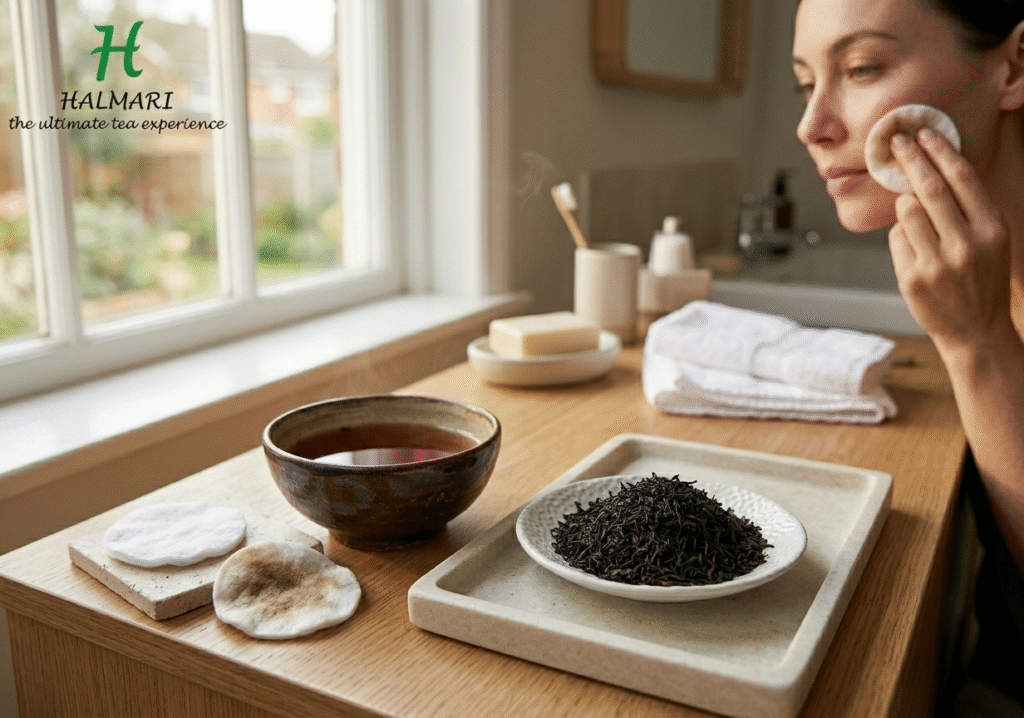
For topical use, the most practical approach is a cooled black tea compress brew a cup of plain black tea, allow it to cool completely, then apply with a soft cloth or cotton pad to the face for 5–10 minutes.
Avoid adding milk, sugar, or flavourings. Start with a patch test, especially if you have sensitive skin.
A black tea face application works best as an occasional soothing step, not a daily treatment.
Keep expectations realistic: the benefit is mild, calming, and cumulative and not an overnight transformation.
Some people like to use tea directly on their skin as a compress or a simple homemade application. That can be a reasonable approach, provided expectations stay realistic.
A cooled tea application may feel soothing, and research on tea extracts suggests that feeling isn’t only cosmetic.
In multiple studies, tea compounds have shown antibacterial activity, anti-inflammatory effects, and skin-supporting properties.
That said, a black tea face pack is best seen as a light, optional step in a skincare routine which is not a cure-all.
Patch testing remains important, and sensitive skin should always be approached with extra care.
Consistency and restraint matter more than intensity here. Doing too much at once is rarely the better approach for skin health.
How to Add Black Tea to Your Skincare Routine
The most effective way to include black tea in your skincare routine is to make it a daily drink rather than an occasional topical treatment.
Pair it with a consistent basic routine like moisturiser, SPF, and a barrier-supporting product and treat any topical application as a light, optional complement.
Black tea works best as a supporting habit over time, not as a hero ingredient or a quick fix.
Here is a straightforward, honest way to include black tea in your skin care approach:
- Drink it plain or with a small amount of sugar and avoid overloading with sweeteners.
- Wear sunscreen daily. This is non-negotiable, regardless of what else you include in your routine.
- If applying topically, think of it as a soothing aid, not a targeted treatment.
- Results build gradually and consistency over weeks matters more than intensity of any single use.
- Pay attention to what your skin actually responds to, rather than following trends.
Final Thoughts: Is Black Tea Worth Including in Your Skincare Routine?
Black tea is a credible, well-studied addition to a skincare-conscious lifestyle.
Its polyphenols like theaflavins and thearubigins are consistently linked to antioxidant, anti-inflammatory, and antibacterial properties that matter to skin health.
The evidence favours daily drinking over occasional topical use for most benefits.
It is not a replacement for medical care, concentrated skincare, or sunscreen. But as a regular habit, it is one of the more scientifically supported dietary choices for long-term skin health.
Black tea may not dramatically transform your skin overnight, but it offers more than just a comforting drink.
The consistency of black tea is what makes it so valued. When included as part of a regular routine, it may help support a calmer, more balanced skin appearance over time.
For those who already enjoy tea daily, choosing a high-quality option of black tea from Halmari Tea can be a simple way to complement both your routine and overall experience.