TGFOP, or Tippy Golden Flowery Orange Pekoe, is a grade that forms part of the classification for orthodox Assam tea.
It is a whole-leaf tea having large quantities of golden tips (young buds), which are an indication of a finer selection of the leaves, coupled with a more refined appearance.
In Assam, the grades in progressive tip presence are as follows: OP (Orange Pekoe) → FOP (Flowery Orange Pekoe) → GFOP (Golden Flowery Orange Pekoe) → TGFOP (Tippy Golden Flowery Orange Pekoe) → TGFOP1 (the highest level of TGFOP grading).
Grades describe leaf structure and tip content and not flavour, not cup quality. They are one reference point in a broader evaluation.
Tea grade labels often create confusion before a buyer even gets to the product itself.
A description can have a lot of letters: OP, FOP, GFOP, and TGFOP. It is harder to interpret than it should be for many people.
Tea grading can also lead to mistakes when it is being bought for business purposes.
There is a tendency for buyers to focus excessively on grading when it is just one of the different factors to be considered.
That is particularly true for Assam tea grades. India remains one of the largest tea producers in the world, with annual production exceeding 1.3 billion kg, and Assam is a major contributor to that.
In a market that big, grading terms are important as they affect how tea is discussed, compared, and sold.
However, these letters do not tell the complete story. They help identify what kind of leaf it is, whether there are tips, and what category of tea it falls into.
They don’t replace taste, lot appraisal, or commercial judgment. This is where the explanation in simpler terms comes in handy.
What is the Importance of Tea Grading in the Assam Tea Trade
The Assam tea grading system is important because it gives buyers, sellers, and traders a common language to use.
Grades like OP, FOP, and TGFOP describe leaf appearance and tip presence allowing participants in the tea trade to align quickly on what type of leaf is being offered.
The system does not guarantee quality, but it gives the market a consistent starting point for discussion and comparison.
Tea grades are not merely pretty letters for a commercial buyer. They influence how products are presented, what buyers expect, and how pricing is positioned.
A grade gives you a general idea of what sort of orthodox tea is being sold.
This is why the tea grading system in India is still useful. It provides a common reference point for everyone involved.
It may not be the most ideal system, but it is definitely something.
What Assam Tea Grades Tell Us About Leaf Style?
Assam tea grading is based on how the tea leaves appear after processing and sorting.
This includes how the leaves are sized, whether they are whole or broken, and the number of golden tips (young buds) that may be present.
These are descriptions of leaf structure, not measures of flavour or cup quality.
In business, a grade may indicate the following:
- If the tea is more like whole leaf or broken leaf
- If there are visible tips
- If the tea may be in a higher-end visual category
- How the tea could be listed or spoken about by buyers
Why the Indian Tea Grading System Is a Reference Point & Not a Quality Guarantee
The Indian tea grading system, managed by the Tea Board of India, provides a standardised vocabulary for describing leaf appearance, not a promise of cup quality.
It is perfectly plausible for a tea with a higher grading to underperform in taste when compared to a more low-grade tea that has a better growing condition.
Grades are handy in trade, however, savvy buyers will factor in the estates, the time of year (buying season), and the taste (sensory quality) when considering a purchase.
The most important thing to keep in mind is that the tea grade is what one has to work with, but doesn’t necessarily dictate quality.
What Tea Grade Labels Like FOP, GFOP, TGFOP and TGFOP1 Actually Tell Us
Each letter in Assam tea grade codes builds on the following:
- OP- Orange Pekoe (whole leaf, standard grade)
- FOP- Flowery Orange Pekoe, indicates a high quality whole-leaf orthodox tea that appears to contain some young buds or fine-leaf materials.
- GFOP-Golden Flowery Orange Pekoe (whole leaves with golden tips)
- TGFOP- Tippy Golden Flowery Orange Pekoe, indicates a leaf that seems to contain a good number of golden tips with a highly polished visual appearance.
- TGFOP 1- A more selective choice within the TGFOP family that is considered top tier.
These terms denote leaf structure and not flavor. ‘Orange Pekoe’ is not referring to the flavor of the tea being orange, and Flowery is not referring to a floral scent that has been added, but rather the presence of buds.
The best way to understand these grade codes is to treat them as product names that have been abbreviated.
Each combination of letters adds a bit more information about the leaf, specifically its size, structure and the presence of golden tips.
Orange Pekoe’ is a leaf-size and grade classification from the Dutch East India Company‘s colonial tea trade, with the term ‘pekoe’ derived from a Chinese word for the fine white hairs on young tea buds.
It has nothing to do with orange fruit or orange flavor.
These are descriptors of trade that have been functional in the market of the Assam tea for over 100 years, and as such, they let the buyer avoid making the error of displacing grade labels with flavor encapsulations.
A well-made and poorly-made tea, can receive the same grade.
The letters don’t tell you which one will taste better in the cup.
Why TGFOP Holds Commercial Value in the Assam Tea Market
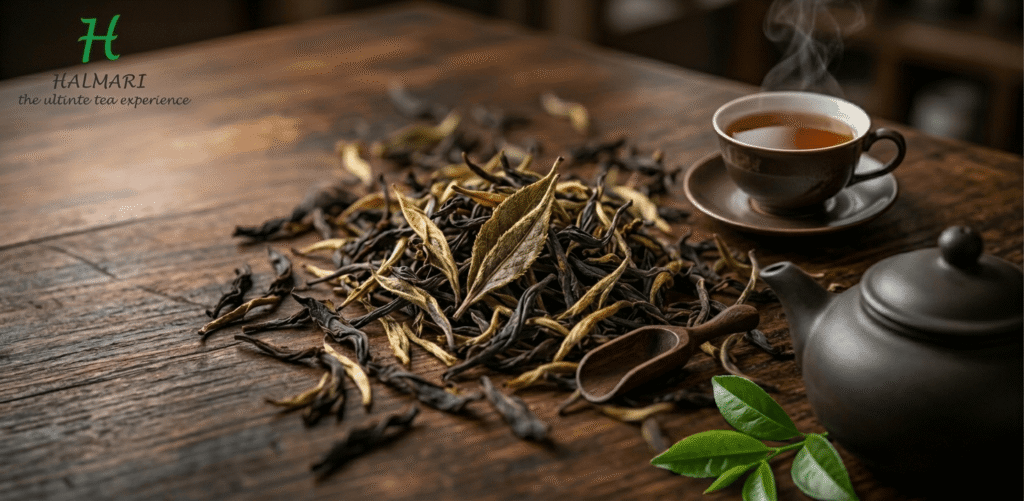
TGFOP carries commercial value because its visible golden tips signal a premium leaf selection, which affects how buyers perceive, position and price the product.
Within the trade of tea from Assam, a polished leaf appearance has a notable influence on the language of catalogs, how products are packaged for gifts, product placement in shops, and the expectations of the buyers, even before tasting the brewed leaf.
This commercial reality is visual, but the grade may not confirm the flavor or the consistency.
The quality of Assam tea grades does not reveal which are the best.
The TGFOP tea grade tends to receive greater attention among orthodox grades because it denotes a leaf style that is often considered more polished.
The visible tip presence gives it a premium appearance and that appearance matters commercially.
How TGFOP Grade Affects Product Positioning, Retail Pricing and Buyer Perception
In the Assam orthodox tea market, a TGFOP designation supports premium retail positioning because of the leaf’s visual quality, abundant golden tips and consistent appearance that aligns with what premium buyers and gift-market customers expect.
Retailers, hotels, and export buyers often use TGFOP as shorthand for ‘visually superior leaf’, which influences catalogue descriptions, shelf placement and price point expectations.
This commercial utility is real and well established in the trade, regardless of whether the grade confirms superior flavor.
In practice, a TGFOP designation can influence:
- Shopper appeal and visual shelf presence.
- High-end product positioning in retail and export channels.
- Gift packaging and premium category placement.
- Catalogue language and product descriptions.
- What customers anticipate when they see the grade on a label.
This does not imply that TGFOP is always the best option. A specialty loose-leaf retailer may care more about seasonal character and origin story than visual leaf grade.
A wholesale buyer, however, needs to factor in consistency, visual quality and pricing, not the grade alone.
What GTGFOP1 Means and When Extended Grade Suffixes Actually Signal a Better Selection
GTGFOP stands for Grand Tippy Golden Flowery Orange Pekoe, a designation that signals a particularly fine tip selection above the standard TGFOP level.
The ‘1’ suffix (as in TGFOP1 or GTGFOP1) typically indicates a more selective lot within that grade, a higher proportion of fine golden tips and a more uniform leaf appearance.
As with all Assam grades, extended suffixes describe leaf presentation, not guaranteed cup performance.
They signal a more selective sourcing standard, which is commercially relevant but not a substitute for sensory evaluation.
Another term that creates confusion is the GTGFOP1 meaning.
In trading, the term usually refers to a more selective orthodox leaf standard with a strong tip presence. The last number typically indicates a better grade choice within that group.
But it shouldn’t be seen as a sign of a better-quality drink. It is a valuable landmark, but only a signpost.
What Assam Tea Grades Don’t Explain About Quality
What Assam tea grades accomplish is limited. They cannot predict tea’s taste, the vibrancy of the liquor, the consistency of the future lots of tea, or the tea’s market fit.
A grade is simply how the leaf looks after sorting, not how it was grown, when it was harvested, how the leaf was processed, or the cup experience.
Grades are a step in the process, not the final outcome.
This is the point that counts most in real-life purchase circumstances. Tea grades provide some information, but not much.
They help explain what the leaf looks like once it has been made and sorted. They don’t properly explain what the tea will taste like when brewed.
What a Tea Grade Cannot Predict About Liquor Quality, Harvest Season, and Flavour
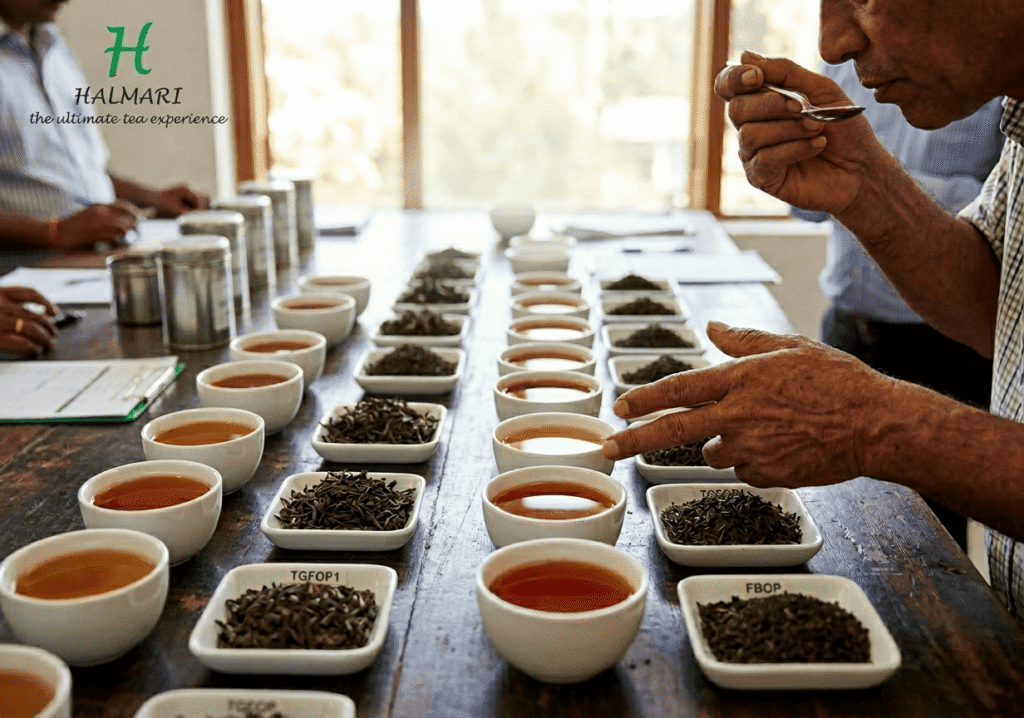
An Assam tea grade reflects the processed leaf’s appearance. It tells you nothing about the cultivation of the tea, in which flush the leaf was plucked, the care taken in withering and firing the leaf, or what the liquor will look and taste like.
A first-flush Assam TGFOP and a second-flush Assam TGFOP from different estates will taste completely different, even if they share the same grade.
Grades are post-processing visual descriptors, not a window into the growing or manufacturing quality.
A grade does not tell you:
- How vibrant or flat the liquor is.
- Whether the tea is at its best in a particular flush or season.
- How well balanced the cup is, or whether it suits a specific audience.
- How consistent future lots from the same source will be.
An explanation of Assam tea grades helps buyers avoid losing money. A grade is the starting point in most cases, and high-skilled buyers consider other aspects before deciding on their purchase.
What are the Seven Things That Are More Important Than Grade Label
When buying Assam tea, buyers will look beyond the grade label and take into consideration seven elements:
(1) estate or origin credibility
(2) timing of the harvest (flush and pick date)
(3) appearance, color and aroma of dry leaves
(4) liquor brightness and clarity
(5) structure and body of the cup
(6) consistency across lots and
(7) price in relation to the intended use.
These factors contrast the grade label which merely describes the visual of the tea.
These factors determine if the tea grade delivers the visual expectations when compared to how the tea delivers on the visual of the tea.
An assessment process must consider:
- Estate or origin credibility – who grew it and where.
- Harvest timing – flush and specific picking date.
- Dry leaf – appearance, color, and aroma.
- Liquor brightness – clarity and color in the cup.
- Cup structure – body, balance, and finish.
- Lot consistency – does the quality hold across multiple orders?
- Price vs. application – is the cost appropriate for the intended use?
This is when a proper understanding of Assam tea grades becomes useful in business. It restricts buyers to interpret the label as it is.
How to Explain Tea Grades to Customers
When you explain the grades of Assam tea to the customer, you should say ‘FOP’ means that tea is whole leaf with slightly colored young buds and TGFOP is a whole leaf tea with embellished Golden tips, to give a more sophisticated appearance.
Avoid historical trade terminology. Tell the customers the grades, explain the tea leaf appearance, while the actual cup depends on where, when and how.
Customers will benefit from concise explanations derived from these grades which will offer them insight into the product they are going to purchase.
A Simple Template for Explaining FOP and TGFOP to Retail Customers
To retail customers, Assam tea grade explanations would be, “FOP means tea containing whole leaves with some fine young buds.
This results in the leaves having a more uniform look. On the other hand, TGFOP means tea with more golden leaves which makes the tea more presentable.
These grades pertain to the leaves not to the taste of the tea. This is dependent on the origin and picking of the tea.”
This level of honesty and professionalism fosters customer trust.
Conclusion
When describing the taste and the quality of Assam tea, codes FOP and TGFOP should be just one of many reference points in a broader evaluation which includes reputation of the estate, the time of the harvest, the senses and the cost-benefit of the tea.
A TGFOP grade signals a visually polished leaf selection; it does not guarantee the best cup.
The most dependable way for business customers to utilize the grade is as one of many reference points. The way leaves look is important. The substance of the tip is important. Even so, the cup’s quality, consistency, and fit with the target market are equally important.
Reading labels and knowing how to shop smart are two different skills. If you’d like to buy some premium orthodox assam tea, check out major producers like Halmari Assam Tea, who offer reliable options in the premium segment.