Summary
Assam tea and Darjeeling tea are two distinct Indian teas with different growing regions, flavor profiles, caffeine strength, and brewing styles. Assam tea is bold, malty, and higher in caffeine, while Darjeeling tea is lighter, aromatic, and more delicate. This comparison helps readers decide which tea suits their taste, energy needs, and daily drinking habits.
Introduction
The tea section at the store creates confusion for many customers.
With so many variations to choose from, people often get confused, often between two rivals: Assam and Darjeeling.
So let’s settle this once and for all. Assam tea vs Darjeeling tea: which tea is worth the spot in your kitchen? This all depends on what you want from your tea.
It can depend on your drinking preferences and the time you take to prepare your tea.
Assam tea and Darjeeling tea differ mainly in flavor, strength, caffeine, and brewing style.
Assam tea is bold, malty, and high-caffeine—ideal for mornings and milk tea while the Darjeeling blend is lighter, floral, and complex—best enjoyed plain for slow sipping.
Origins of Assam Tea and Darjeeling Tea
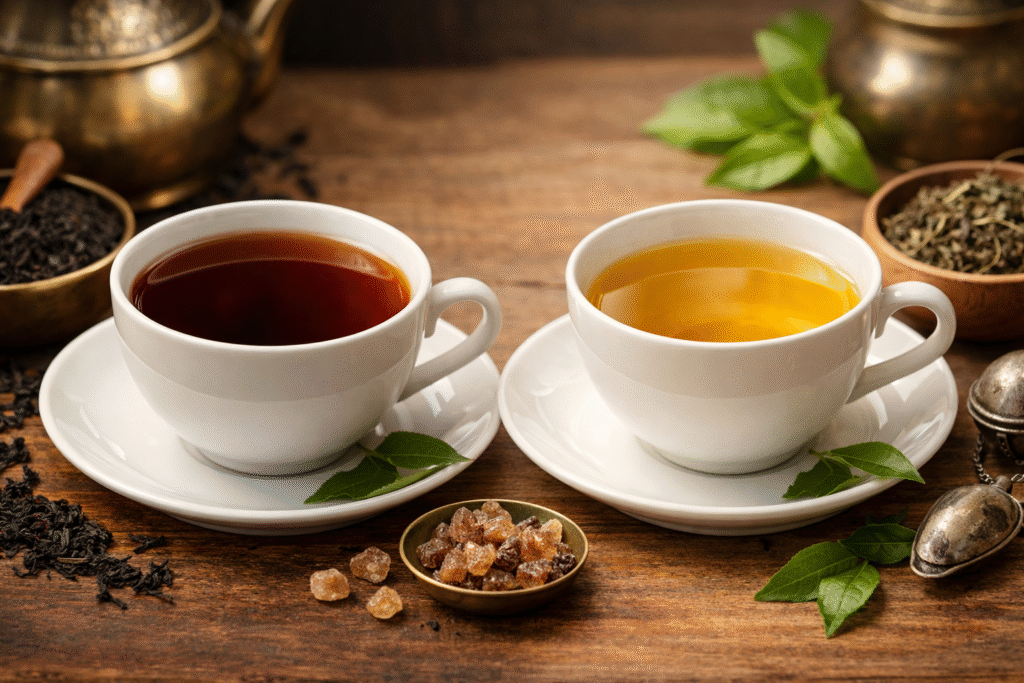
Geography matters a lot in determining the taste profile of tea. It’s one of the primary reasons why Assam tea and Darjeeling tea taste so incredibly different.
The first Assam tea bush was discovered in the early 1800s, and is a black tea grown in the Brahmaputra Valley of India. For most of the year, it is hot, humid, and rainy.
The locality is situated at low elevations and experiences an extreme monsoonal climate. The valley has almost tropical soil that yields heavily bodied, malty tea leaves.
It’s kinda perfect for growing tea that kicks a serious flavor punch.
Darjeeling tea comes from the foothills of the Himalayas in West Bengal. The altitude is high, over 6,000 feet above sea level. It is grown in cooler temperatures, misty mornings, and well-drained mountainous soil.
Compared to Assam tea, the conditions in which this type of tea grows create something different. It is delicate, nuanced, and often called the “Champagne of teas”.
The high altitude is responsible for slowing the growth process. This leads to a concentrated flavor.
Assam tea vs Darjeeling tea: An Overview
| Feature | Assam Tea | Darjeeling Tea |
| Growing Region | Low-altitude Brahmaputra Valley | Himalayan foothills |
| Flavor | Malty, bold, brisk | Floral, muscatel, delicate |
| Caffeine | Higher | Moderate |
| Best With | Milk, spices, sweetener | Plain, no milk |
| Best Time | Morning | Afternoon |
Assam Tea vs Darjeeling Tea: Taste Comparison
Flavor Profile of Assam Tea
Here’s where things start to get really intriguing. You are greeted by the full-bodied, pungent flavor your taste buds expected!
It’s malty and sturdy, often brisk. What’s there is a sort of natural sweetness that is underneath all of that power, little hints of caramel or even chocolate notes.
It’s the kind of tea that doesn’t wake you up with caffeine, but rather with pure flavor intensity.
Assam tea gives you a full, milky tea experience of warmth and deep satisfaction, with scrumptious flavor.
Flavor Profile of Darjeeling Tea
Darjeeling tea is known for standing out in the realm of tradition, compared to Assam tea. It’s more limpid,more delicate, and this amazing complexity comes to it very slowly.
First flush Darjeeling, the spring tea, has floral, nearly fruity notes and a light astringency.
Second flush, picked during the summer time, imparts this unique muscatel flavour which has faint grape-like astringency and sweetness.
There is this brightness to it, this clarity that makes every sip feel genteel and high-toned.
Caffeine Content: Which One Wakes You Up Better?
Caffeine Levels in Assam Tea
Looking for that morning jolt? Energize yourself with a cup of Assam tea.
It usually has more caffeine than the Darjeeling variety—about 60-90 milligrams per cup. That difference may not sound enormous, but you’ll notice the distinction, particularly if these are the types of black tea you’re using to get your day underway.
The greater caffeine content is the result of Assam’s growing conditions. And those warm, low-elevation gardens tend to produce leaves with more caffeine naturally.
To top it off, variations of Assam tea tend to have larger leaves and full-bodied buds that make a bigger impact.
It’s why so many people reach for Assam-heavy blends when they need serious morning energy.
Caffeine Levels in Darjeeling Tea
A lighter dose of caffeine makes the Darjeeling blend ideal for afternoon drinking, or those who feel jittery from too much caffeine.
The caffeine content in Darjeeling tea is about 40-70 or so. You get a lift, but it’s classier, less likely to leave you bouncing off the walls.
There are people who actually prefer this; they want alertness without the jitters that can result from higher-caffeine teas.
Both the teas have that amino acid L-theanine, though, you know, the one that soothes away hyper focus in tandem with caffeine.
So no matter which path you opt for, you’re getting less jittery energy than coffee.
How to Brew Each One Right
Brewing method matters way more than people realize, and these two teas need different approaches to really shine.
How to Brew Assam Tea for Full Body and Strength
Assam tea can take, in fact, it seems to prefer, an aggressive brewing.
Steep 3-5 minutes in water just off the boil. The tea is sturdy enough to handle that heat and a long steep without growing bitter.
Many Assam tea drinkers also use it for making chai. And the cup will still have lots of flavor when you stir in milk and spices, along with a sweetener.
The tea is a nice platform for all the other ingredients to come up with their flavour permutations.
How to Brew Darjeeling Tea to Preserve Delicate Flavors
Darjeeling requires a gentler touch. You want your water to be around 185-195°F for the first flush (possibly a little hotter for the second flush).
Steep for just 2-4 minutes. Go too hot or too long, and you’ll leach out those harsh tannins that hide all those delicate flavors you’re paying for.
Darjeeling tea is supposed to be drunk plain, without milk, so that you can savor the complexity.
Price Points and Availability
Why Assam Tea Is More Affordable and Widely Available
Let’s talk money for a minute here. So, by and large, Assam tea is cheaper than its Darjeeling counterpart.
You’ll also find high-quality Assam tea range at pocket-friendly prices, because it’s just in abundance.
The cultivation conditions allow for higher yields, and the tea has a forgiving personality, so you don’t have to be as meticulous about brewing it to enjoy good results.
Why Darjeeling Tea Commands a Premium Price
Here, particularly first flush and high-altitude garden teas fetch premium prices.
Limited production, labor-intensive harvesting on steep mountain slopes, and that luxury-tea reputation all add to the cost.
A top-notch first flush Darjeeling tea might cost three or four times what you’d pay for a top-drawer Assam blend.
With that said, you can find reasonable Darjeeling tea at an affordable price. It is worth a try, even if you are on a budget.
Just don’t expect the same sort of ethereal complexity as those expensive estate teas.
Health Benefits of Assam tea & Darjeeling Tea
Both teas come with strong health benefits – but there’s a catch: they go about it in different ways.
As a fully oxidized black tea, the Assam variety contains a bunch of theaflavins and thearubigins, which are antioxidants that do a lot to support heart health and keep cholesterol in check.
On the other hand, the polyphenols in Darjeeling tea are great for digestive health & have anti-inflammatory properties.
To be honest, the health differences aren’t quite dramatic enough to sway your decision either way.
Both of these teas are excellent additions to your diet, so drink whichever one you actually like more – because if you only drink it because it’s ‘good for you’, then it probably won’t be a long-term habit.
Which One Is Right for You?
Now, when it comes to choosing between the two beverages, is there even a right answer? The only way to think about it is this.
If you’re a fan of a bold, in-your-face flavor that can hold its own against a bit of milk and sugar, go for Assam tea.
If you’re looking for a morning pick-me-up or need a kickstart to get you going, and you like a good, strong black tea with a malty taste, then it is the one for you. On top of that, it’s also a great option if you’re on a budget but still want quality.
Choose Darjeeling tea if you love complexity and nuance in a cup of tea.
If you want to explore a load of interesting flavours, like to drink your tea plain, or are looking for something a bit special to enjoy with a quiet afternoon at home, then it is worth treating yourself to.
It’s perfect for those who really take the time to appreciate their daily cup as a special moment.
Actually, here’s a thought – why do you have to choose?
A lot of serious tea drinkers have both in their collection. They’ll use Assam tea when they need a bit of a kick to start the day, and Darjeeling tea when they want to slow down and actually taste their tea.
They really do complement each other beautifully, covering all the different moods and moments in an average day.
Conclusion
The great debate of Assam tea vs Darjeeling tea, which is better, doesn’t need to have a winner.
These teas have their own unique roles to play, answer to different cravings, and each in its own way wins the prize.
Both Assam and Darjeeling teas have been protected under India’s Geographical Indication (GI) status, reflecting their unique origin and quality.
The right choice for you really depends on what you like to drink, how you like to drink it, and what feels good at that particular moment.
Now that you understand the key differences in taste, origin, caffeine strength, and price, the best way to decide is to experience both styles yourself.
At Halmari Tea, you will find carefully curated teas crafted for bold, everyday comfort that are perfect for exploring how regional character truly shapes the cup.
A decent approach? Keep both around, and let your mood guide what you want to brew.
Your tea collection – and your taste buds – will thank you for the variety.